If you manage network spending plans, you understand the sting of transceiver line items. The optics typically cost more than the switch ports you light. On a recent campus refresh, our team priced a stack of 48-port 10G gain access to switches from a significant vendor at roughly $16,000 per chassis with licenses, while the OEM 10G SR optics priced estimate at $250--$400 each. Totally populating a single switch would eclipse the switch hardware itself. That mismatch is why suitable optical transceivers have moved from fringe to mainstream. The question is no longer whether they work, but where they make sense, how to determine total cost, and how to manage the risks.
This analysis is grounded in field experience across business networking hardware, information center buildouts, and telecom and data‑com connection jobs. I'll stroll through the mathematics, the technical risks, the supply side realities, and the operational patterns that separate clever cost savings from incorrect economies.
Where the money in fact goes
OEM optics have healthy margins since they ride on brand name trust, locked firmware identifiers, and the comfort of one throat to choke. In a greenfield design, optics can represent 20-- 40 percent of CapEx, depending upon port speed and link budget plan. At 10G, the OEM delta might be $150-- 200 per port compared to a well-qualified compatible; at 25G and 100G, the premium widens. Over thousands of ports, that premium funds whole projects.
Costs hide outside the sticker price too. Preparations, sparing techniques, field-replaceable unit preparation, and failure modes impact OpEx. A website without spares ends up spending for hot-shot shipping and downtime. A site with poor vendor diversity learns that single-vendor preparation spikes can stall a go-live. Overall cost suggests including those functional truths to the spreadsheet.
Compatible optics 101, minus the mythology
A suitable transceiver is not a knockoff; it's a standards-based module coded with the EEPROM identifiers your switch anticipates. Appropriately designed, it matches MSA requirements for the kind aspect and optical parameters. The compatibility layer is the coding, not the lasers or DSP. The better suppliers buy:
- Vendor-specific code libraries that pass switch self-tests and DOM telemetry checks across firmware versions. Test utilizes with the real target equipment: open network switches, enterprise core equipment, and service provider platforms, not just golden referral boards. Controlled BOMs: consistent lasers, TIAs, and controllers rather than part live roulette based on market pricing.
The market has grown. When I investigate returns across blended fleets, failure rates for quality compatibles being in the 0.2-- 0.6 percent variety in the first year, comparable to OEMs in similar environments. The long tail of cheap modules-- noisy transmitters, marginal get sensitivity, temperature level drift-- still exists. But so does the long tail of OEM optics that pass the cage but flake under heat. Selection and procedure matter more than the logo.
Modeling overall cost with practical assumptions
A CFO wants a design, not a philosophy. Here's a practical structure that holds up in conference rooms and postmortems alike.
Hardware acquisition: Compare unit rate, consisting of coding and any re-coding guarantees. Assume a reasonable mix: SR/LR/CWDM/ bi-di. Remember that school styles tend to skew toward SR and bi-di, while data centers carry more 100G/400G DR, FR, and LR optics.
Yield and failures: Assume an infant death window-- DOA or early-life failures within 90 days-- and an annualized failure rate thereafter. For quality compatibles, use 0.3-- 0.6 percent annual. For OEM, 0.2-- 0.5 percent. Change based upon temperature and vibration exposure.
Spares method: On gain access to and aggregation, a 3-- 5 percent spare pool works. On special DWDM or long-haul, you might require 10 percent due to the fact that lead time and interoperability screening can bite. Spares wear down headline savings if you overlook them in the budget.
Operational overhead: Estimate hands-on time to RMA, re-code, or replace. Half an hour per module is common on well-documented websites. If the supplier provides cross-ship RMAs and advance replacements, overhead drops.
Risk premiums: Put a dollar worth on downtime. For a trading flooring, minutes matter. For a storage facility choice line, a link flap might not. Risk-adjusted expense transforms technical stress and anxiety into a number you can compare.
We tested this structure on a 1,200-port 10G expansion with 48 new 100G uplinks in a two-tier leaf-spine. OEM prices: $270 per 10G SR, $1,350 per 100G SR4; compatibles at $68 and $425 respectively. We carried a 0.2 percent failure delta against compatibles, a 4 percent spare pool for 10G, 6 percent for 100G, and two hours per 100 incidents in extra troubleshooting overhead. Even with conservative penalties, the project conserved just under $290,000 on optics, enough to money dual-homed open network changes for lab and staging plus a year of maintenance.
The interoperability imperative
Transceivers sit at the limit between optical physics and digital strictness. On paper, MSA compliance indicates any SR module speak with any SR module. In practice, several information matter.
Firmware picky-ness: Switch suppliers often tighten up SFP/DDM checks in new firmware. A suitable that worked in 2015 may toss a small alarm after an upgrade, even while passing traffic. A fully grown provider tracks these changes, offers upgraded coding, and ships replacements pre-coded for various target platforms when needed.
DOM accuracy: Digital diagnostics telemetry (temperature level, TX power, RX power, bias present) must be stable and calibrated. Line cards use these worths for alarms. Misreported RX power leads to false "link minimal" flags and wasted truck rolls. When you evaluate samples, compare DOM values versus a calibrated power meter; you want deviations under ± 2 dB on power readings and stable temperature level reporting across the module's range.
Forward error correction: On 25G and above, FEC interaction matters. Change ASICs may default to RS-FEC or BASE-R FEC; specific optics require FEC to hit BER targets. Make certain your supplier understands and documents the expected FEC settings per optic and platform. I have actually seen 100G DR optics from 2 brands act identically up until FEC toggled during an MLAG flap, where one brand name showed a BER spike for a few seconds. The cure was just pinning FEC mode clearly-- recorded, however only if somebody believed to read the great print.
Cable plant realities: Short-reach optics are flexible, long-reach are not. On LR at 10 km, a couple of dB of additional loss from filthy connectors or aggressive spot cord attenuation turns a comfortable link into an issue child. An excellent fiber optic cables supplier can pre-clean and deliver checked jumpers and MTP trunks with measured insertion loss. Budget them into your plan; optics answer for dirty glass.
Where compatibles shine
Access and aggregation layers love compatibles. The economics are strongest where link lengths are brief and optics are standardized-- 10G SR to the desktop aggregation, 25G SR in the leaf, 100G SR4 or DR for spinal columns. In these tiers, volumes are high, spares are low-cost, and changing vendors are tolerant as long as coding is accurate.
Open network switches are particularly friendly. Whitebox and britebox manufacturers hardly ever block third-party optics, and the NOS environments (SONiC, Cumulus, and supplier versions) expect multi-vendor optics. In brownfield environments, mixing OEM and compatible modules prevails: OEM for the mystical DWDM shelves and high-power ZR/ZR+ lines, compatible for whatever within the building.
The sweet spot for repayment is ports you can anticipate. If your access layer burns through 200 SR transceivers a quarter, standardized compatibles let you keep a turning extra swimming pool and hit a stable per-port expense. For 100G and 400G, the delta widens further. In 400G, we've seen OEM FR4 over $3,000 and certified compatibles under $1,200. Usage care at 400G for thermal headroom and faceplate density-- some high-radix chassis run hotter than the datasheet implies.
When to stick with OEM
There are times to write the larger check. Proprietary optics that carry function bits outside the MSA-- breakout fanouts connected to switch-specific auto-negotiation, optical taps for monitoring that feed supplier telemetry, ZR+ meaningful modules with tight DSP integrations in the router OS-- are safer as OEM. Also in regulated environments where your assistance contract explicitly disclaims third-party optics and you need that vendor to support every line in the network, stick to one brand.
Another case is project timing. If your group has no procedure for vetting, coding, and sparing compatibles, the soft expenses of a crash adoption-- late-stage optics swap, unintended recognition time-- can consume savings. I've paused a migration when field groups did not have fiber scopes and cleaning up sets. Cleaning up and examination aren't optional; they're the difference in between "suitable optics don't work" and "we cleaned the connector and the link stabilized."
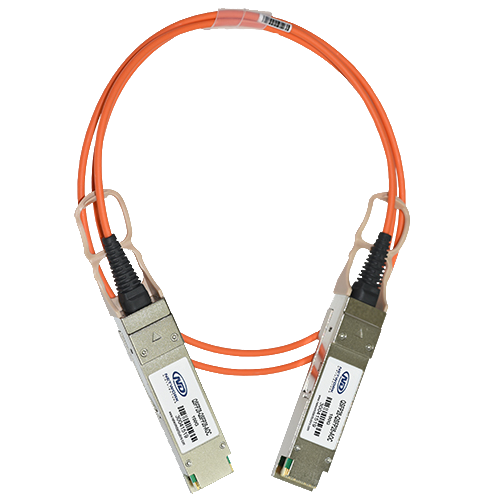
Building a shortlist and testing like a pro
You want a partner, not a parcel service. The best compatible vendors behave like integrators. They ask what switches you run, what firmware you pin, which optics mix you prepare over the next year, and which websites have raised ambient temperature levels. They keep coding profiles across platforms. They publish compatibility matrices and keep them existing. They run genuine soak tests with the gear you own.
Before dedicating, run a bake-off. Pull 10 to twenty modules per type throughout 2 or three suppliers. Stage them in the same chassis you'll deploy. Mix link lengths: the shortest runs often see reflections that play differently than mid-length runs. Force link flaps and port-channel renegotiations. Verify DOM readings versus meters. Leave a subset under load for a week in a warm rack. You're not chasing hero numbers; you're hunting for outliers and surprise failure modes.
Finally, call references. Request customers with your switches, not a generic "It works everywhere." In enterprise networking hardware, vendor A's line card 3.2 acts differently than line card 4.0 in subtle ways. The skilled providers understand those quirks and will inform you.
Hidden levers beyond unit price
Sparing discipline: The worst technique is no technique. The 2nd worst is overbuying spares that sit in the incorrect structure. Right-size spares by layer: gain access to in a regional closet, core and spine in a central cage with a sign-out process. Label spares by coding target-- switch household and NOS variation-- so night shift doesn't invest an hour figuring out what will show up clean.
Lead time and logistics: Rate indicates little if you can't get stock. The past few years taught agonizing lessons on optics and part lead times. Ask providers for rolling schedule views and appropriate alternatives. If your 25G SR batches sometimes deliver with a different laser producer, need consistency within a lot; blending can develop a misalignment in DOM standards that confuses auto-threshold alarms.
Thermal and air flow: High-density 100G and 400G optics toss heat. When you plan front-to-back or back-to-front air flow, check that the module cage and faceplate permit appropriate exhaust. We discovered a top-of-rack switch whose bezel hindered a particular vendor's somewhat thicker 400G module locking system; it seated, but strained under heat growth. A small mechanical variance can end up being a big functional headache.
Coding flexibility: Re-coding is a safety valve. If a module can be re-coded from Supplier X to Vendor Y in the field, your extra swimming pool is more flexible. The very best partners will pre-label and manage coding stock so you aren't running a cottage market of EEPROM updates in the data center.
Warranty and RMA experience: A guarantee's fine print matters less than turnaround. Cross-ship beats repair each time. A provider happy to pre-position emergency situation spares at your hub makes their margin.
A note on fiber and cleanliness
Transceivers get blamed for sins devoted by filthy or mismatched fiber. If you work with a reputable fiber optic cables provider, ask for insertion loss test reports on MPO trunks and LC patching, especially for anything in the spinal column. Tape a little alcohol clean and a lint-free swab package to each package; habits modifications when techs have cleaning up materials at hand. On bi-di links, a single unclean ferrule can surge the RX error rate without dropping the link, producing ghost efficiency issues that appear like a marginal transceiver.
I keep a pocket note from a campus rollout: ten "bad" SR optics changed in one afternoon, only for the eleventh to bring the link after we cleaned both ends. That pile of "dead" optics returned into service after cleaning the plant. The lesson stuck. Construct cleansing and assessment into your approach of procedure. It lowers your evident failure rate and makes compatibles look boringly reputable, which is the goal.
Accounting treatment and supplier relations
Procurement in some cases presses back: blending third-party optics makes complex support. Valid point. Two methods help.
First, ring-fence. Choose layers where you'll standardize on compatibles and document it. Keep OEM preferred compatible optical transceivers in exotic tiers that need guaranteed vendor attention. When it's a conscious, controlled policy, supplier Fiber optic cables supplier account groups appreciate the choice more than a random mix.
Second, service credits. If a supplier firmly insists that third-party optics void assistance, put a provision in the assistance agreement that restores full protection for events unassociated to optics or when OEM optics are swapped during troubleshooting. Practical account supervisors know that optics seldom cause core routing issues; they will work with you.
From an accounting view, compatible savings can fund helpful OpEx: better SLAs for field services, or spares staging in remote regions. When finance sees savings reallocated to risk decrease rather than simply slashed off the budget plan, approvals get easier.
The 100G and 400G frontier
At higher speeds, the stakes increase. Two patterns emerge.
First, electrical lane configurations and retimers matter. DR, FR, LR optics at 100G and 400G engage with the switch's SERDES in a different way than SR-class optics. Make sure the module's host interface is compatible with the switch ASIC's equalization settings. Great suppliers will share tested profiles per platform or at least flag known caveats.
Second, breakout topologies enhance complexity. When you break a 400G port into 4x100G, an asymmetry in one lane can look like a random port flap buried in a LAG elsewhere. You need clean visibility. Use DOM throughout all four lanes and aggregate alarms smartly. This is where DOM precision and supplier assistance earn their keep.
Thermals also bite faster at 400G. In a laboratory test, we saw a 5-- 7 ° C distinction between two brands under identical load in a 1U 32x400G switch. Both were within spec, however the hotter modules reduced fan life and pressed chassis sound up. If your information halls run warm for PUE factors, this matters.
Calculating business case action by step
Here is a succinct checklist you can adapt to your environment:
- Inventory target ports by speed, range class, and platform. Catch firmware baselines. Shortlist two to three suitable providers with proven coding for your switches and open network changes in your lab. Run a bake-off with 10-- 20 modules per type. Validate DOM, FEC, link stability, and thermal behavior. Document results. Model overall expense: unit prices, extra pool size, failure assumptions, RMA logistics, and operational overhead. Decide ring-fenced tiers for compatibles and OEM. Update requirements, MOPs, and spare labeling. Work out support language with your OEM where needed.
A disciplined procedure beats personality-driven choices. The mathematics will typically steer you towards compatibles for the high-volume, low-drama portions of the network and OEM where features or supplier take advantage of dominate.
Case sketch: local health care network
A healthcare provider with five medical facilities and twenty centers prepared a refresh: 2,400 10G access ports, 160 25G server links, and 64 100G uplinks. OEM optics priced at $260 for 10G SR, $380 for 25G SR, and $1,180 for 100G SR4. Three compatible suppliers priced estimate $72, $118, and $460 respectively. The team ran a 45-day trial on 2 access stacks and one spinal column pair. Outcomes:
- No link flaps after firmware upgrade to the targeted steady release. DOM variation within ± 1.5 dB on power readings compared to meter. One early-life failure out of 200 modules, replaced by means of cross-ship in 48 hours. A minor alert noise concern after allowing auto-thresholds on one switch family; fixed by standardizing threshold overrides.
The final style used compatibles for all 10G and 25G, OEM for 100G on the spine due to the fact that of a prepared microburst telemetry function that the OEM tied to the SR4 optics. Net cost savings: $310,000 on CapEx. They applied $50,000 to build remote extra depots and $40,000 to extend on-site support protection, equating savings into resilience.
What excellent providers look like
There's a human component. A partner that comprehends your environment will conserve you from gotchas. Qualities to look for:
- Transparent BOMs and coding support throughout your switch portfolio. Proactive compatibility updates when your OEM launches brand-new firmware. Access to engineering who can answer specifics on FEC, DOM calibration, and thermal profiles. Sensible service warranty with cross-ship and foreseeable RMA logistics. Depth in nearby equipment: quality patching, MTP trunks, pre-terminated cassettes, and cleansing sets. The very best outcomes happen when optics and fiber arrive as a matched plan instead of a stack of parts.
If your fiber optic cables provider also handles optics, test them on both fronts. The integration reduces finger-pointing. If they don't, make sure handoff standards so that insertion loss targets and polarity schemes line up.
The cultural shift
Many teams still bring scars from early third-party optics-- modules that required a completely still rack and a prayer to raise. The marketplace has matured. The rise of open network switches and broader convenience with multi-vendor environments changed expectations. Procurement likes a competitive optic line due to the fact that it puts a ceiling on OEM rates. Engineering likes it when the modules just work and DOM numbers tell the truth.
Adopting compatibles isn't an all-or-nothing position. It's a scalpel, not a hammer. Press them where they yield uncomplicated wins, keep OEM where the community actually requires it, and revisit the balance as platforms evolve.
Final take
CapEx lives in the details. Suitable optical transceivers, effectively sourced and verified, trim big numbers without welcoming mayhem. The levers are basic: strenuous testing, truthful failure assumptions, disciplined sparing, and clear boundaries on where to deploy. The savings cascade: released budget plan develops into better coverage, quicker tasks, and sometimes the difference in between a single-path compromise and a dual-path finest practice.
In telecom and data‑com connection, boring is gorgeous. You want optics nobody speak about after the first day. With the best partner and process, compatibles provide precisely that-- strong links at practical prices, and headroom in the budget to invest where it really alters outcomes.