Campus networks are living organisms. They grow by accretion, soak up new buildings and labs, bring decades of legacy procedures beside fresh Wi‑Fi 7 gain access to points, and seldom get a clean slate. Versus that background, open network switches pledge to cut vendor lock‑in, drive down expense per port, and modernize operations with API‑first tooling. Those gains are genuine, but they're not totally free. Success depends on understanding where open switching shines, where it stumbles, and how to assemble a useful stack from silicon to optics to software.
I have actually led 2 school revitalizes that moved large parts of the access and distribution layers to open networking while keeping the core on conventional chassis for a time. The mix worked due to the fact that we appreciated physics, budget plans, and people. What follows is a playbook from the field, with specific trade‑offs, gotchas, and the connective tissue many shiny diagrams skip.
What "open" in fact suggests in a campus
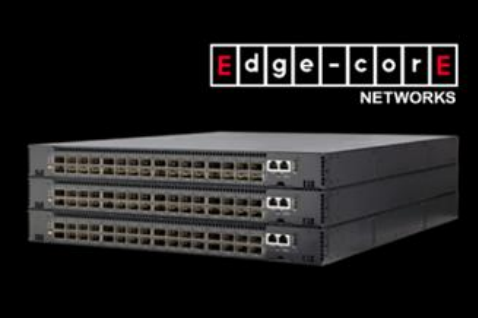
Open network switches pair merchant silicon from vendors like Broadcom or Intel with either an open network operating system (NOS) or an industrial NOS that isn't locked to a single hardware supplier. The hardware normally follows OCP or similar design conventions, exposing basic interfaces for bootloaders, ONIE installation, and out‑of‑band management.
Open doesn't imply hobbyist. In a school, it usually indicates:
- White box or brite‑box hardware in 1U or 2U footprints, with 10/25/100G uplinks and 1/2.5/ 5G PoE gain access to ports. A NOS such as SONiC, Cumulus Linux (now NVIDIA Cumulus), IP Infusion OcNOS, or Arrcus, picked for features and operational model. A disaggregated supply chain for optics and cabling, with suitable optical transceivers sourced from authorized suppliers instead of only the switch OEM. Automation first setup via Ansible, Nornir, or native gNMI/REST APIs.
The draw is versatility. If a PoE budget plan modifications for a lab structure or you require VXLAN EVPN just at particular aggregation blocks, you can match hardware and software per role instead of buying a one‑size stack for everything.
Where open switches fit in a normal campus design
The school has distinct character at each tier. That lets you make targeted decisions.
At the access edge, open switches shine when you have standardized closets: hundreds or countless ports feeding APs, phones, and typical office endpoints. You desire PoE/PoE+ or 802.3 bt, peaceful fans, and deterministic features like 802.1 X, MAB, DHCP snooping, and voice VLAN. Open NOS options deal with these well today, and the economics enhance dramatically with scale. If your company runs zero‑touch provisioning and you're comfy treating switches like Linux servers with ASIC pipelines, functional friction is low.
At distribution, the calculus turns on routing features and high schedule. EVPN fabric spines, school L3 entrances for big VLAN domains, and quickly convergence during upkeep windows demand fully grown BGP, MLAG or MC‑LAG equivalents, and sometimes MPLS interop. SONiC and business NOS choices have actually reached a point where EVPN‑VXLAN with active‑active multihoming is robust, but you should check interop with your core and firewall softwares. Open switches are feasible here when you standardize on an EVPN material and keep FHRP complexity to a minimum.
At the core, two constraints typically press groups to keep traditional chassis for a while longer: feature breadth around multicast, complex QoS hierarchies for voice/video, and the organization's threat tolerance for a campus‑wide control airplane. Merchant‑silicon based core designs absolutely work-- I have actually deployed 100G spinal columns with EVPN path reflectors and fine‑grained QoS for lecture capture-- but this is the last step most campuses take, not the first.
Economics without the wishful thinking
Per port costs drop with open switches, but cost savings depend on 3 levers: hardware list prices, optics, and operational overhead.
Hardware: For 48x1/2.5 G PoE with 4x25G or 4x100G uplinks, I regularly see open gear 25 to 40 percent below exclusive equivalents at comparable PoE budget plans. Negotiation moves both sides, so put reasonable numbers in your model: your incumbent vendor will sharpen the pencil when you put a rival on the table.
Optics: This is where disaggregation pays. When you buy just OEM‑branded optics, 10G SR modules can run two to four times the price of suitable optical transceivers from a credible 3rd party. The delta at 25G and 100G is even bigger. In one refresh, we recaptured well over six figures on optics alone by verifying a single provider across the fleet. Caveat: work just with a fiber optic cables supplier that releases coding assistance for your switch models and offers serialized test reports. Inexpensive optics end up being expensive when they flap every couple of hours under heat.
Operations: The often‑ignored line item. A team comfy with Linux networking, TACACS/RADIUS, and Git‑backed config management will release and run open changing effectively. If your team's closest brush with Linux is a VM running syslog, expect a finding out curve: NOSs that appear like Linux also behave like Linux when disks fill, when you require to turn logs, or when you need to patch OpenSSH CVEs on an out‑of‑band port. Budget plan training and laboratory time in any truthful ROI.
The optical layer is not an afterthought
Campus efficiency and dependability are bound to optics and cabling quality. Even the best switch ends up being temperamental with unclean ferrules or mismatched reach.
On multimode, keep OM4 as your standard for brand-new runs and push for short‑reach variations on 100G where supported. For buildings with longer risers or where you expect 400G in the medium term, pull single‑mode and sleep better later on. If you're updating floors piecemeal, focus on connector types and patch panel density to prevent a rat's nest of adapters.
With open switches, you'll often use compatible optical transceivers coded for your NOS and hardware SKU. Healthy practice appears like this: preload test trays with every module type you prepare to deploy, bake them at raised temperature for several days, and confirm DOM limits under worst‑case light budget plans. Your fiber optic cables supplier must lend sample reels and offer insertion loss specs by reel, not just theoretical values.
One more practical routine: standardize on a cleansing package and logging procedure. When a link drops listed below minus 3 dBm headroom, have the field techs clean both ends and log pre and post‑clean readings. It conserves truck rolls and stops the blame game in between switching and cabling teams.
Feature maturity that really matters in a campus
Datasheets look similar throughout suppliers. Genuine networks are less forgiving. The following functions separate wish lists from required‑in‑practice:
Policy and access control. 802.1 X with dynamic VLANs, MAB alternative, and downloadable ACLs from your NAC platform must be boringly steady. Test reauth storms with a few hundred clients and guarantee the NOS deals with RADIUS server failover without wedging ports. Voice VLANs must work easily with LLDP‑MED. If your phones tag traffic, check nuanced behaviors like untagged to tagged transitions throughout power cycles.
PoE behavior. A campus access switch is a power plant with Ethernet attached. Validate PoE budgeting at scale. See how the switch enforces concern during a building‑wide brownout or generator cutover. 802.3 bt gadgets behave in a different way than legacy phones. On one network, an open switch line card stopped working to work out power with specific PTZ cams throughout cold starts below 10 ° C. The fix was a firmware update, however it only appeared after we ran cold‑room tests.
L2 scale and defenses. Quick STP might be a tradition in your design, but if any labs still rely on L2 adjacency, you require consistent BPDU guard, root guard, DHCP snooping, and ARP assessment. Run negative tests. Loop a cable television by accident and confirm the switch does the right kind of angry.
Routing and overlays. EVPN‑VXLAN is the modern-day campus backbone tool. Examine type‑5 path assistance if you want inter‑VRF route dripping, and ensure symmetric IRB works across MLAG pairs. If you still require PIM‑SM or SSM for IPTV or lecture capture, verify whether your NOS supports it in hardware at your scale. Some NOSs punt mystical multicast to the CPU at higher fan‑out.
QoS beyond the brochure. Education networks bring voice, lecture capture, remote laboratories, and VR demonstrations. Construct a test that fills uplinks with big circulations while pressing EF and AF41 traffic. Verify that the ASIC pipeline implements shaping and top priority in both directions. The last time I ran this on a new open equipment model, we found default buffer profiles that starved EF during microbursts till we tuned headroom.
Telemetry and automation. sFlow or Inband Network Telemetry is more than a checkbox. If you mean to drive capability planning and DDoS detection from it, verify export rates and validate they don't hammer the CPU. For config management, deal with switches like livestock: construct golden images and declarative configs, not artisanal SSH sessions.
Vendor support and the "who do I call" problem
Disaggregation suggests you now have three to 5 partners involved: the switch hardware vendor, the NOS provider, your optics and cabling providers, and possibly a system integrator. When something stops working at 2 a.m., you require a straight course to remediation.
The most successful campuses I have actually worked with did two things. First, they established a main assistance wrapper, either through the NOS vendor or a partner with escalation rights to hardware and optics manufacturers. Second, they developed a tidy demarcation for fixing: record the tests that isolate optics from PHY from link partner from LACP behavior. That decreases finger‑pointing and gets you to a replacement or spot faster.
Service level arrangements should be specific about advance replacement, cross‑ship timing, and software flaw escalation. If you're bringing in a new NOS, request a called TME during rollout and your very first semester in production. The cost is modest compared to the time conserved during corner‑case bugs, specifically around PoE or EVPN convergence.
Security is not a box you examine once
Open NOSs are often Linux under the hood, which is a blessing for patching and a responsibility for hardening. Plan for OS‑level CVEs together with network‑feature repairs. That implies you require an image lifecycle that can soak up kernel updates, OpenSSL patches, and bootloader modifications without weeks of modification control purgatory.
Here's a simple, long lasting method:
- Maintain three trains: laboratory, pilot, and production. No image leaps from laboratory to production. Enforce signed images and validated out‑of‑band transport. If your out‑of‑band network is flat, repair that first. Track SBOMs for each image, whether you utilize SONiC or a commercial NOS. Your security group will ask, and you'll respond to in hours rather of weeks.
On the access edge, lock down management airplanes the exact same way you would on proprietary equipment. Disable SSH password auth, prefer TACACS with per‑command accounting, rate‑limit control procedures, and pin NTP and RADIUS to management VRFs. If you expose gNMI or REST for automation, put them behind mTLS and turn client certs on a schedule.
Migration without breaking the semester
Campus revitalizes live under scholastic calendars and developing closures. Few things sour a task faster than removing registration week due to the fact that an EVPN knob behaved in a different way than the lab.
Sequence the migration along blast radius. Start with dormant closets or low‑risk structures like facilities or HR. Transfer to access layers where user density is moderate, then continue to distribution blocks that do not bring the registrar or dormitory Wi‑Fi. Keep the core last until the rest of your material has logged a complete term of uptime with regular patch cycles.
A standard play that works well:
- Build a parallel EVPN fabric in circulation with open switches, tie it to the legacy core through redundant L3 connections, and migrate VLANs one building at a time with DHCP lease coordination. For wireless, coordinate AP join and image compatibility with your controller vendor. Some APs are fussy about LLDP and PoE negotiation on very first boot after a move. Stage in the laboratory with the exact switch model. Freeze modification windows throughout finals and important enrollment periods, even if it slows the project. Stakeholders keep in mind interruptions more than they appreciate speed.
Document the differences that matter. If your operations team is utilized to a CLI that deals with spanning tree one way and your new NOS identifies it differently, record the translation in a pocket guide. In one release, we printed a two‑page laminated sheet with the leading fifty commands and fielded fewer employ the very first month than in any previous refresh.
Working with optics and cabling providers like a pro
Not all third‑party optics are equal. A reputable fiber optic cable televisions supplier will act like a partner instead of a discount rate warehouse. You desire a provider that:
- Provides coding and compatibility matrices for your exact hardware and NOS versions. Offers serialized test results and DOM readout samples for the batch you receive. Supports returns and cross‑ships without drama if you discover edge cases under load.
For cabling, demand consistent labeling standards and reel‑by‑reel loss documentation. In multi‑building schools, coordinate single‑mode versus multimode choices with centers planning. Pulling the ideal glass as soon as beats cheaping out and revisiting risers in 3 years.
If you're nervous about blending optics sources, pilot with a package approach: use vendor‑branded optics on inter‑building uplinks and introduce suitable optical transceivers on gain access to uplinks and server links where threat is lower. Over time, as self-confidence builds, broaden their footprint.
Automation: the make‑or‑break habit
Open changing pays back teams that automate. The NOSs expose APIs and structured state in methods some proprietary CLIs conceal behind show commands. Usage that to your advantage.
Define gain access to switch configs declaratively. Describe port functions-- AP, phone plus PC, printer-- and let design templates render the right edge functions. Shop everything in Git, impose code evaluation on modifications that affect big groups, and include tests. Even easy checks like "all access ports should enable DHCP sleuthing and storm control" catch fat‑fingered exceptions.
Telemetry cements the worth. Stream user interface counters, LLDP neighbors, and EVPN routes into a time‑series store. With two semesters of history, you'll anticipate which structures will fill uplinks during esports occasions and where to land the next tranche of 25G optics. More significantly, you'll see when a firmware update repairs a rare flap you've been chasing after, due to the fact that the noise flooring shifts throughout hundreds of ports at once.
When open is not the best answer
There are times to press time out. If your environment relies greatly on functions that only exist deep in a proprietary stack-- nonstandard multicast workflows, per‑subscriber QoS connected to voice entrances, or inline MACsec at scale-- an open technique might require compromises. If your team is small and extended thin, introducing a brand-new operational model mid‑semester is unkind to everyone.
In one campus, we delayed open switches in the sports complex because broadcast crews depended upon a really specific multicast profile and timing, checked only on the incumbent supplier. We ran open equipment in neighboring structures, got operational muscle memory, then revisited the complex with a comprehensive laboratory strategy and was successful on the second try.
Buying and lifecycle methods that hold up
Treat open hardware and software as separate levers in your procurement. Lock in a multi‑year NOS membership or support term with rights to move in between switch designs. Purchase hardware with extra power materials and fans on the first day; they're low-cost compared to downtime and shipping delays. For spares, a typical rule of thumb is 5 percent of your fleet at the access layer and at least one extra per distinct design at distribution.
Keep images frozen per scholastic term unless a security problem determines otherwise. Usage maintenance windows for staged reboots across fault domains. Track imply time in between failure for optics by model and batch, and push that information back to your provider. They will listen if you bring numbers.
Finally, tie revitalize to power. As Wi‑Fi APs and IoT loads grow, PoE draw will require earlier switch upgrades than bandwidth alone. Modeling your PoE headroom structure by developing avoids "surprise" projects.
A note on interoperability with enterprise networking hardware
Open changing is an addition to the tool kit, not a repudiation of whatever else. Interoperability with enterprise networking hardware is usually simple at L3, and modern EVPN makes interop at overlay edges obtainable. Run standards‑based BFD, adhere to well‑known BGP neighborhoods for policy, and file exactly where you depend on vendor‑specific habits. Watch on MTU mismatches at interop boundaries, particularly when an exclusive platform hides overhead accounting behind a friendly knob.
Voice entrances, security devices, and SD‑WAN edges tend to be more sensitive. Construct a staging environment with representative systems. We uncovered a subtle MAC aging distinction between an open distribution set and a popular firewall HA pair that caused intermittent asymmetric circulations. The repair was insignificant as soon as discovered, yet only emerged after a few days of synthetic load.
The bottom line
Open network changes belong in school networks when you approach them with clear eyes. They trade supplier lock‑in for supply chain optionality, trim capital expenses by disaggregating optics and hardware, and reward groups that welcome automation. They require a bit more from operations-- Linux literacy, image health, and disciplined screening-- and they expose weak spots in your physical plant that shiny pamphlets never mention.
If you're prepared to work with a strong fiber optic cables provider, verify compatible optical transceivers in advance, and design around the truths of telecom and data‑com connectivity in your buildings, open switching can bring your campus confidently. If you build pragmatic guardrails, coordinate with centers and scholastic calendars, and keep compassion for the people who will live with the network after the ribbon cutting, you'll land the benefits without drama.
The network is Click for source not simply wires and silicon. It's a pledge that classes will fulfill, research study will run, and video games will stream on Friday night. Open or not, our job is to make that pledge reliable.